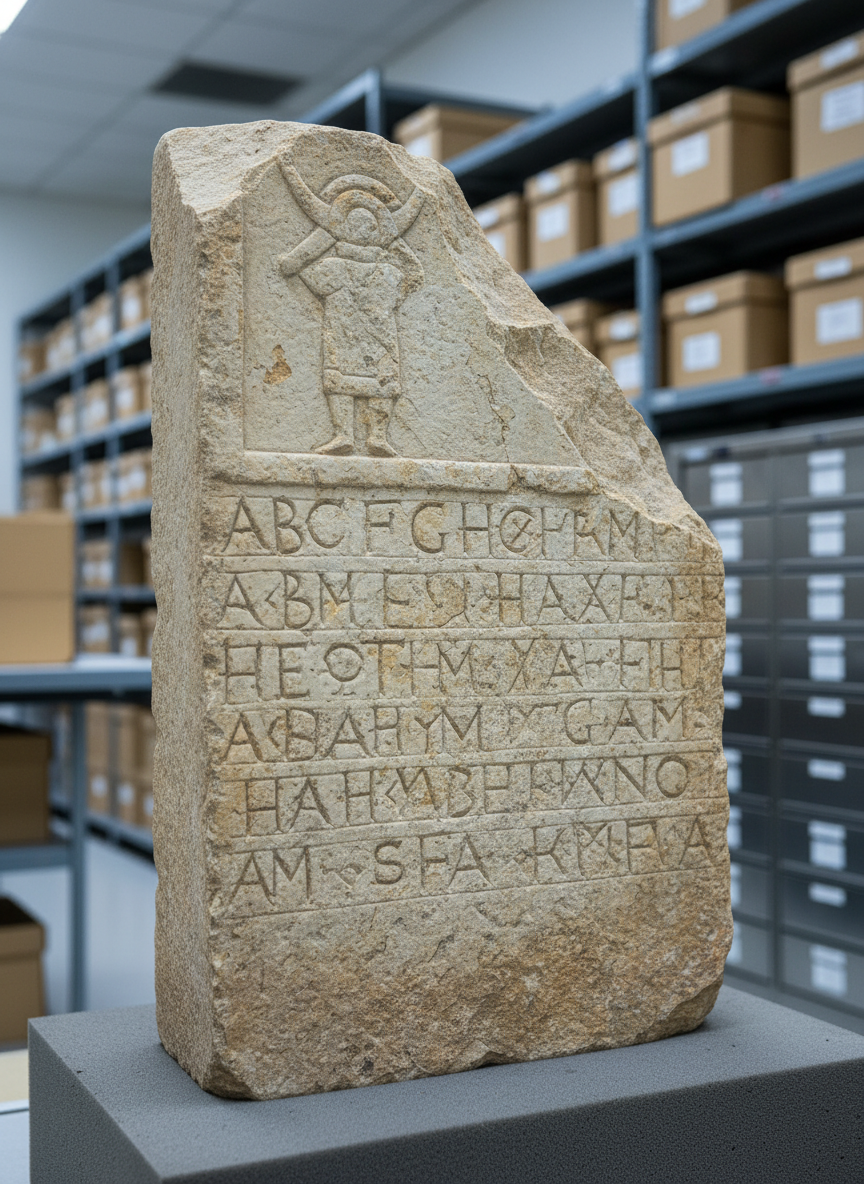
A high-resolution close-up of an ancient West Semitic stone stele fragment, its weathered limestone surface etched with faint, chiselled alphabetic inscriptions and a barely discernible stylized divine symbol near the top. The artifact rests on a neutral-toned archival foam block inside a controlled museum environment, with blurred shelving, acid-free boxes, and labeled drawers in the background. Cool, diffused overhead conservation lighting reveals subtle tool marks and patina variations without harsh glare, creating crisp detail across the inscription. Shot from a slightly oblique angle with the stone filling most of the frame, the photographic realism emphasizes epigraphic features and scholarly examination, evoking a quiet, analytical mood suitable for discussing historical inscriptions and monotheism’s development.

Bibliography

Selected writings on ancient Near Eastern religion, Second Temple Judaism, and West Semitic monotheism.

About

Research Bibliography Overview

Browse Yarah Nazar’s publications, working papers, and lecture materials, organized by genre, topic, and period. Each entry follows academic citation standards and, where possible, links to open-access versions for students, colleagues, and independent researchers.
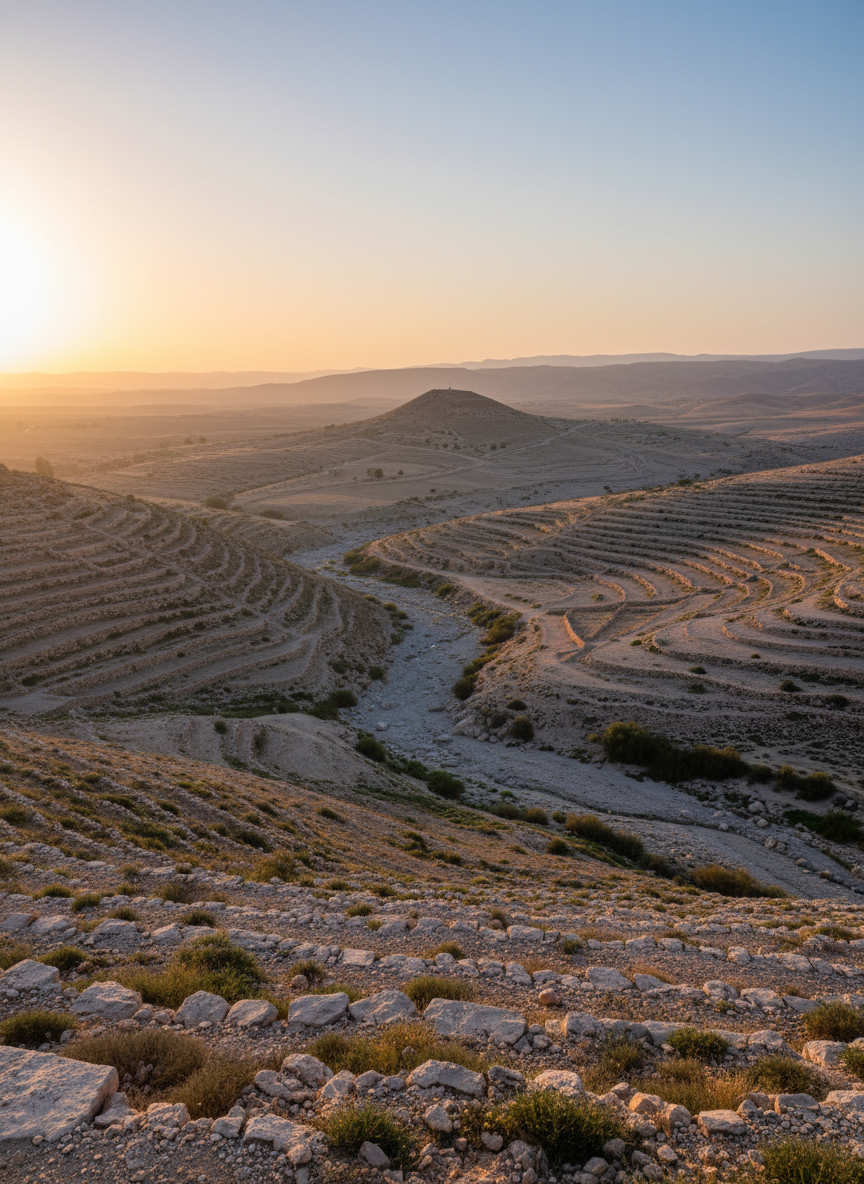
An expansive photographic view of a rugged southern Levantine landscape at sunrise, featuring terraced hillsides, a winding dry wadi, and a distant tell (archaeological mound) rising subtly from the terrain. Sparse, low vegetation clings to pale, rocky soil, while faint stone wall lines hint at ancient settlement patterns. Soft golden morning light grazes the contours of the hills, casting long shadows that emphasize the relief and evoke cosmic geography themes. The sky is clear with a gentle gradient from warm near the horizon to cooler blue above. Captured from an elevated vantage point with wide-angle composition and sharp focus throughout, the image feels serene yet intellectually stimulating, visually supporting discussions of sacred space, pilgrimage routes, and the intersection of landscape and ancient religion.
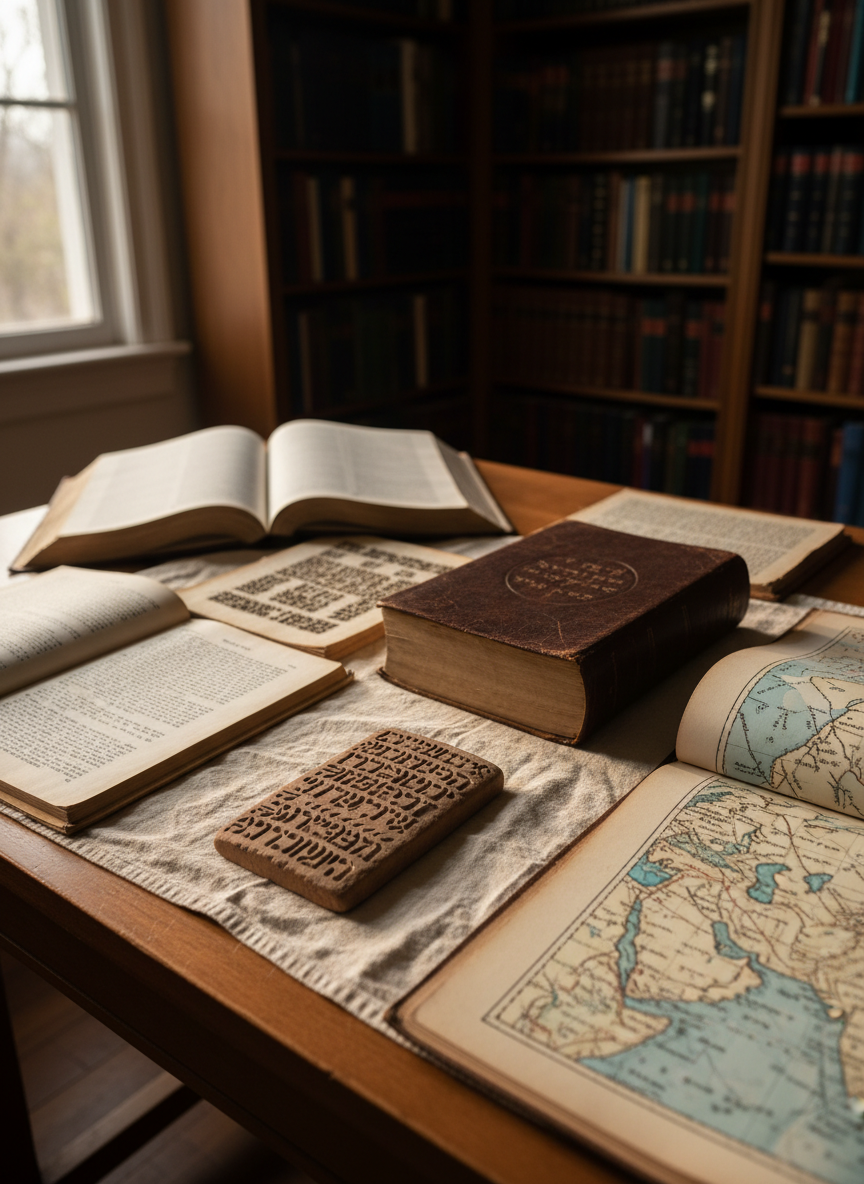
A meticulously arranged wooden study table covered with open facsimile editions of cuneiform tablets, a large Hebrew Bible, and a worn atlas of the ancient Near East, pages filled with maps of the Levant and Mesopotamia. A single clay tablet replica with wedge-shaped inscriptions sits on a linen cloth at the center. Behind, tall bookshelves lined with academic volumes on Second Temple literature and West Semitic religions fade softly out of focus. Late afternoon window light streams in from the left, casting warm, directional illumination that highlights the textures of paper, leather bindings, and clay, with gentle shadows enhancing depth. Photographic realism, eye-level composition with shallow depth of field, creating a contemplative, scholarly atmosphere appropriate for a serious research site.
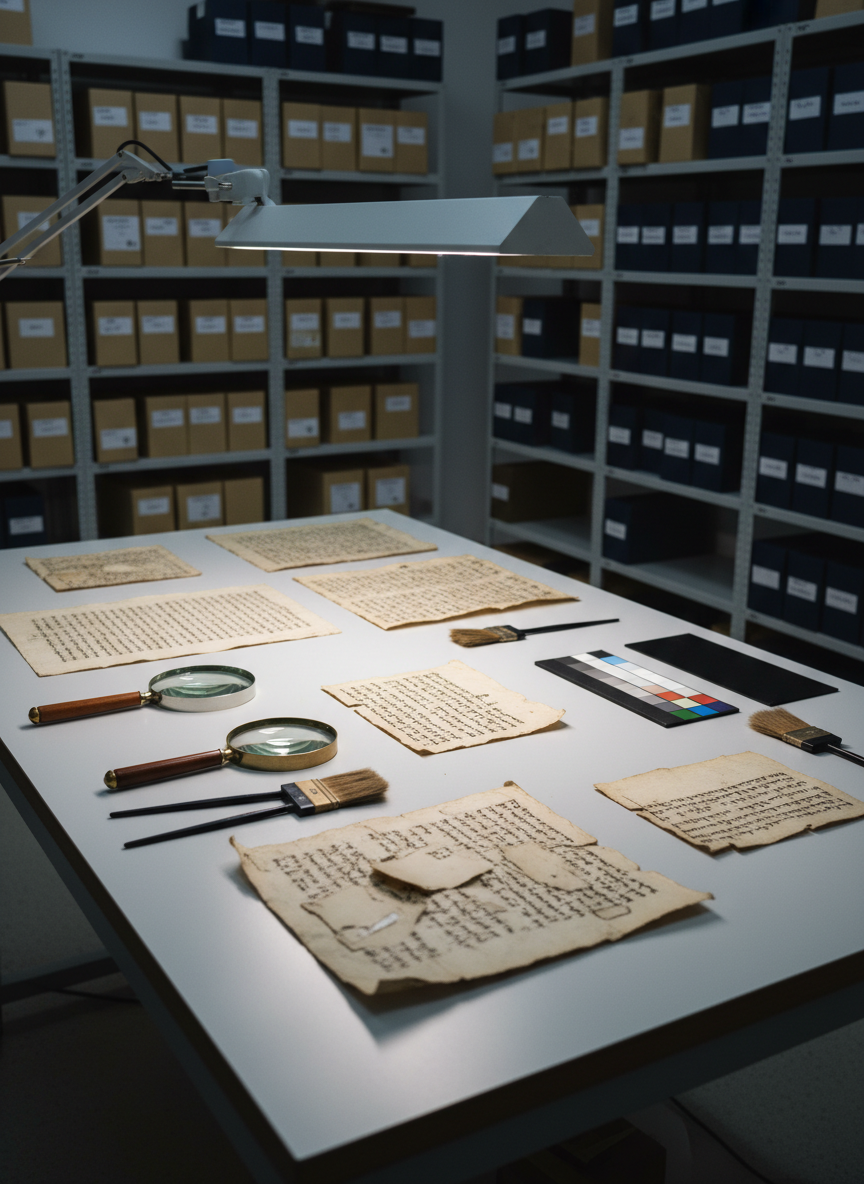
A dimly lit archival room featuring a large, flat conservation table where several high-quality photographs of Qumran-style scroll fragments and Second Temple period manuscripts are carefully laid out. Next to them lie magnifying lenses and soft-bristled brushes, along with a color calibration chart for accurate documentation. Cool, controlled overhead lighting and a focused side lamp create even, neutral illumination with minimal reflections, emphasizing the textures of aged parchment and ink flaking. The background shows blurred metal shelving filled with document cases, maintaining a strictly non-commercial, academic ambiance. Photographic realism, shot from a slightly elevated angle with moderate depth of field, conveys a quiet, methodical atmosphere ideal for scholarship on apocalyptic literature and textual traditions without including any human figures.
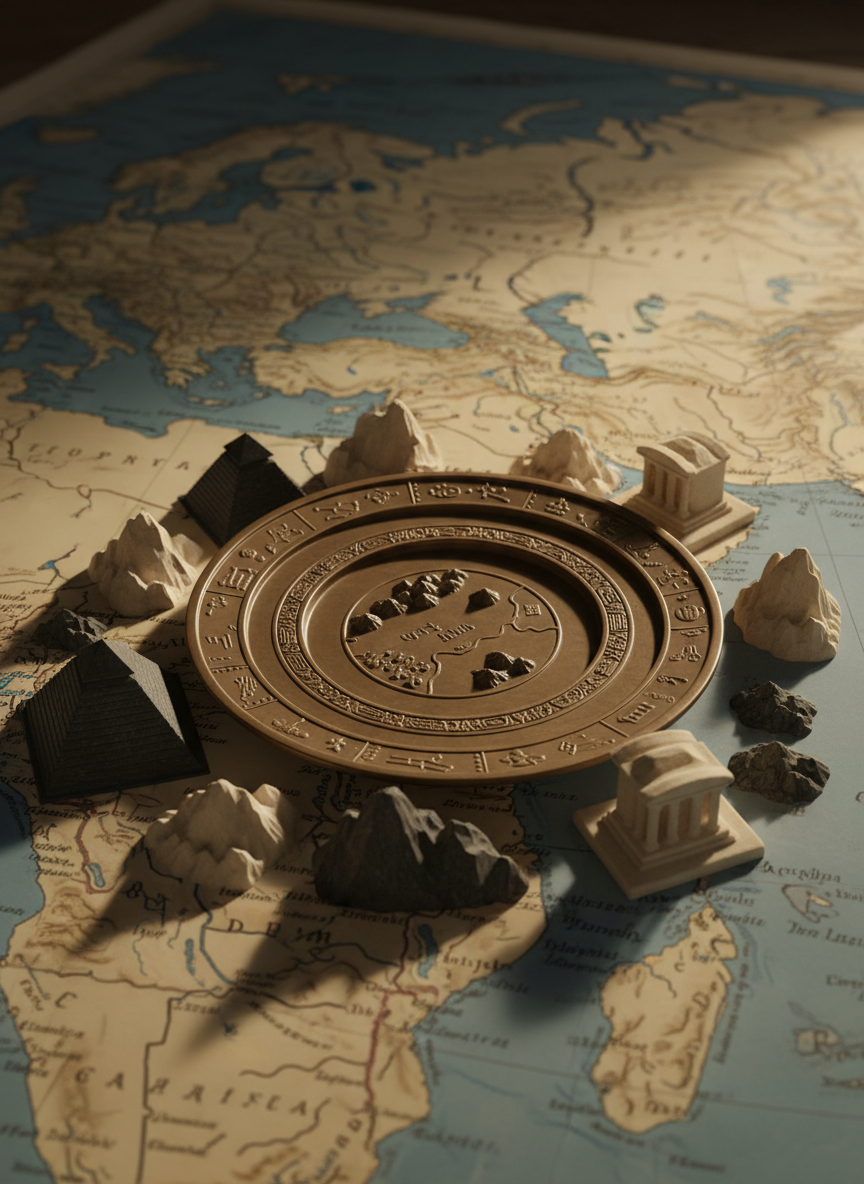
A meticulously staged tabletop scene illustrating cosmic geography in ancient Near Eastern thought: a circular bronze dish engraved with concentric rings representing heavens, earth, and underworld, placed at the center. Around it are arranged small stone models of ziggurats, miniature temple mounts, and stylized mountain forms carved from basalt and limestone. A large, unfolded map of the eastern Mediterranean and Near East, printed in muted sepia tones, serves as the background surface. Warm, directional desk-lamp light from the upper right produces pronounced but soft-edged shadows, accentuating relief on the metal and stone surfaces. Photographic realism with a slightly elevated, three-quarter angle and shallow depth of field creates a focused, meditative mood, visually supporting exploration of Afro-Asiatic cosmology and sacred geographies.

Annotations