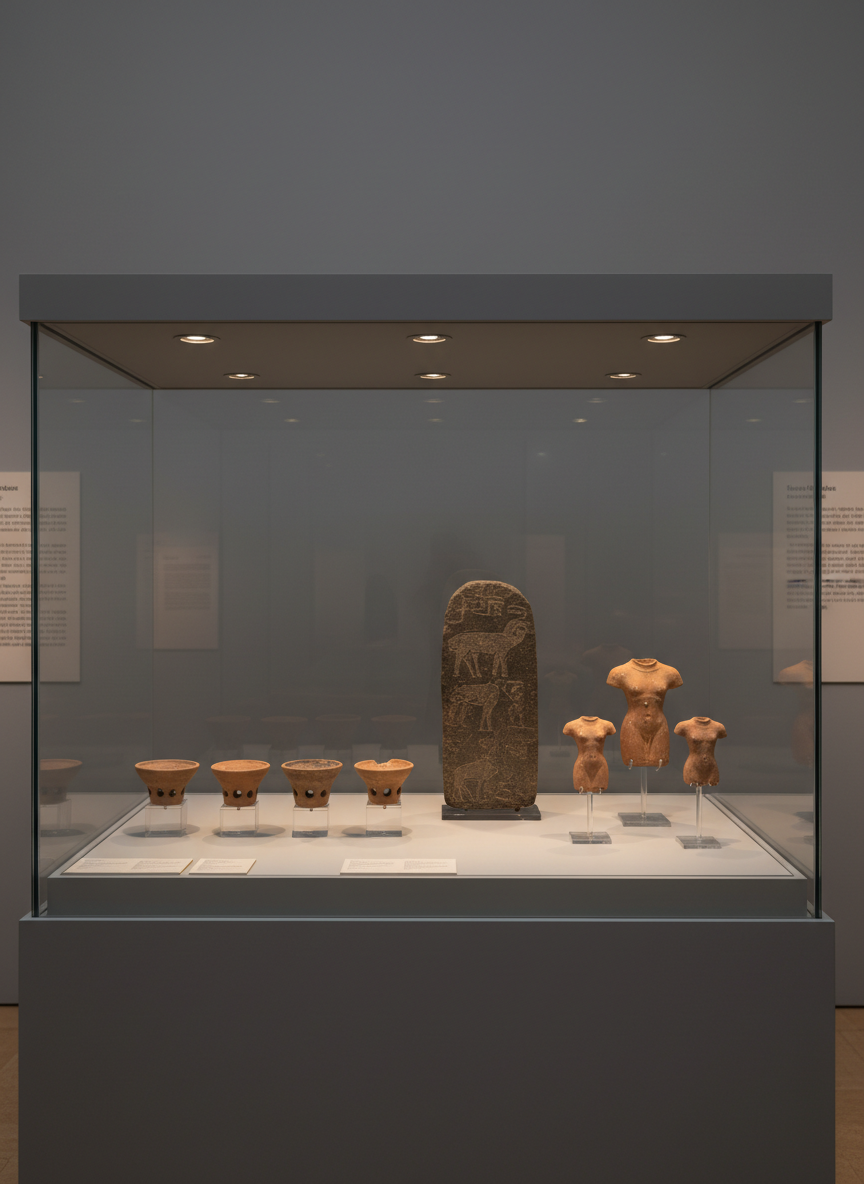
An interior shot of a climate-controlled museum gallery displaying a curated case of ancient Near Eastern cultic artifacts: a row of small clay incense burners, a basalt standing stone with faint iconography, and several terracotta figurative fragments deliberately headless to avoid recognizable human features. Each object rests on discreet acrylic mounts within a glass case. The walls behind are painted in muted, scholarly gray with minimal didactic panels blurred to avoid legible text. Neutral, carefully positioned spotlights within the case create soft highlights and gentle reflections on the glass, bringing out surface details while maintaining an academic, non-commercial mood. Photographic realism, eye-level perspective, and balanced composition underscore the seriousness of research into religious practice and material culture.

Research Overview

Core questions, methods, and projects tracing the evolution of West Semitic and Second Temple religious thought.

About

Research Focus and Background

Yarah Nazar is an independent researcher examining ancient Near Eastern religions, Second Temple Jewish literature, and West Semitic monotheism, with particular attention to cosmic geography, Afro-Asiatic cosmology, and southern Levantine epigraphy within broader questions of cultural exchange and theological development.
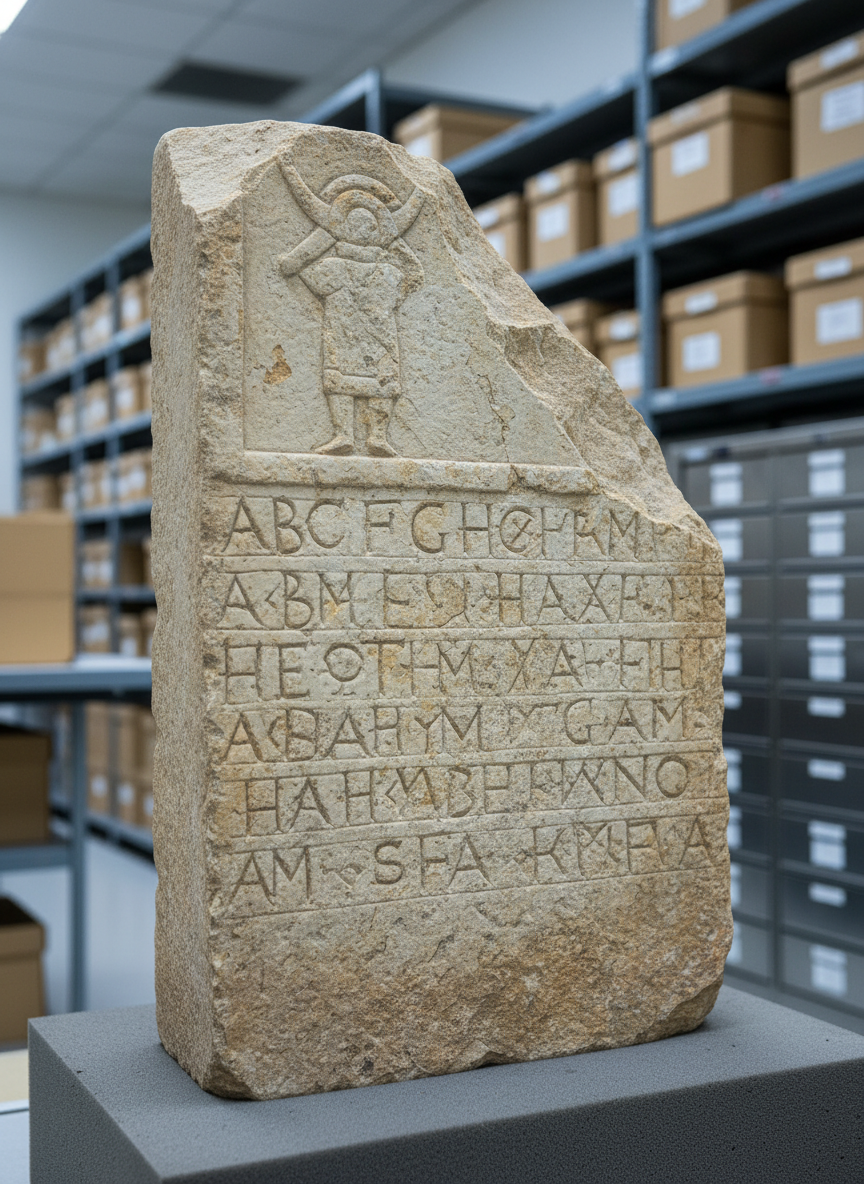
A high-resolution close-up of an ancient West Semitic stone stele fragment, its weathered limestone surface etched with faint, chiselled alphabetic inscriptions and a barely discernible stylized divine symbol near the top. The artifact rests on a neutral-toned archival foam block inside a controlled museum environment, with blurred shelving, acid-free boxes, and labeled drawers in the background. Cool, diffused overhead conservation lighting reveals subtle tool marks and patina variations without harsh glare, creating crisp detail across the inscription. Shot from a slightly oblique angle with the stone filling most of the frame, the photographic realism emphasizes epigraphic features and scholarly examination, evoking a quiet, analytical mood suitable for discussing historical inscriptions and monotheism’s development.

Essays

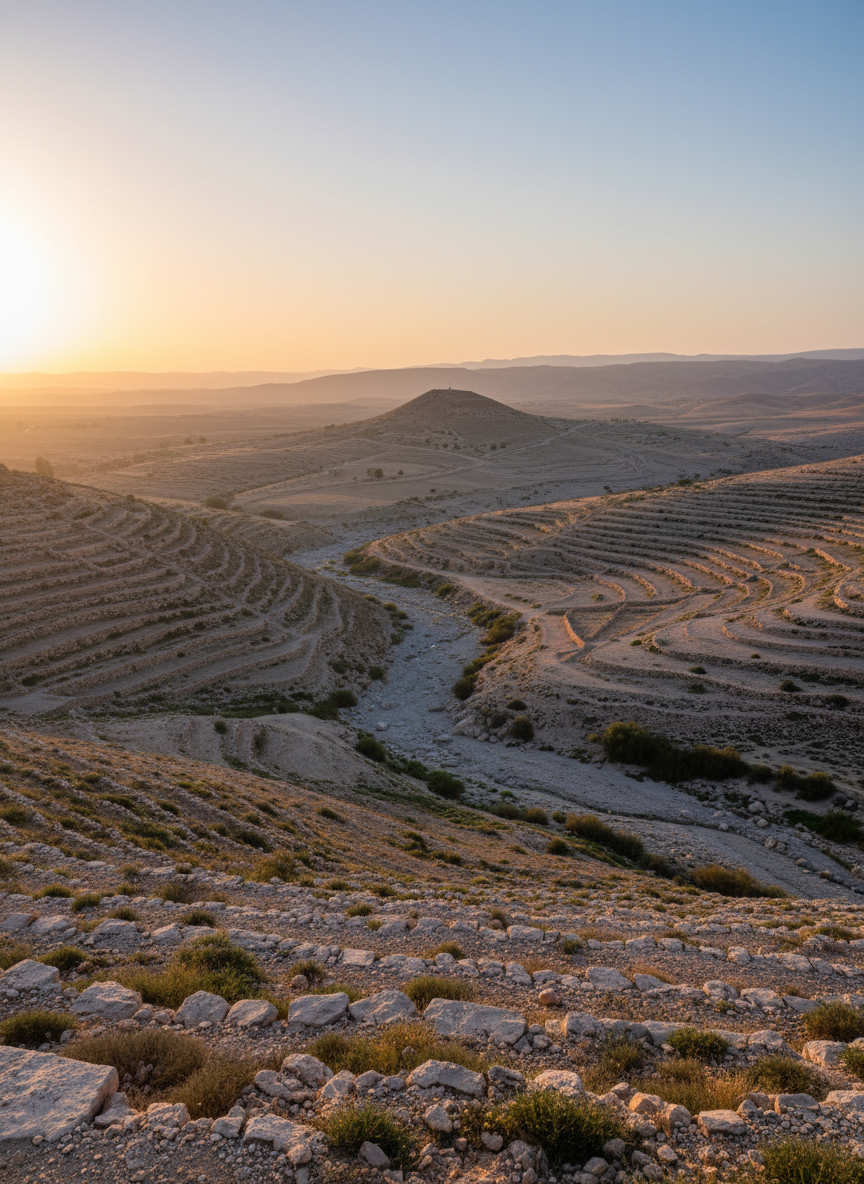
An expansive photographic view of a rugged southern Levantine landscape at sunrise, featuring terraced hillsides, a winding dry wadi, and a distant tell (archaeological mound) rising subtly from the terrain. Sparse, low vegetation clings to pale, rocky soil, while faint stone wall lines hint at ancient settlement patterns. Soft golden morning light grazes the contours of the hills, casting long shadows that emphasize the relief and evoke cosmic geography themes. The sky is clear with a gentle gradient from warm near the horizon to cooler blue above. Captured from an elevated vantage point with wide-angle composition and sharp focus throughout, the image feels serene yet intellectually stimulating, visually supporting discussions of sacred space, pilgrimage routes, and the intersection of landscape and ancient religion.

Schemas

Explore visual summaries of cosmological models, sacred geographies, and methodological frameworks that map how textual, epigraphic, and comparative evidence interlocks across Yarah Nazar’s research on ancient Near Eastern and Second Temple traditions.